
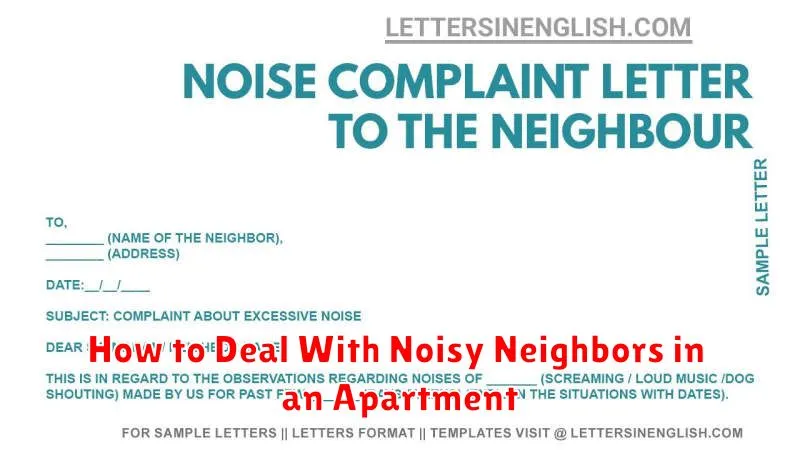
Living in an apartment often means sharing walls, floors, and ceilings with noisy neighbors. Dealing with excessive noise can be a frustrating and stressful experience, disrupting sleep, concentration, and overall peace of mind. This article provides practical strategies and advice on how to deal with noisy neighbors effectively, including communication techniques, mediation options, and understanding your rights as a tenant. Whether you’re facing loud music, constant partying, or disruptive pets, learning how to address the issue constructively can significantly improve your apartment living situation.
Noise complaints are a common occurrence in apartment buildings. From loud music and late-night parties to stomping feet and barking dogs, unwanted noise can quickly escalate into a major source of tension. This guide outlines effective methods for handling noisy neighbors in a respectful and productive manner. We’ll cover how to initiate a conversation with your neighbors about the noise issue, explore options for involving your landlord or building management, and discuss legal avenues if necessary. Gaining a better understanding of how to approach neighbor noise complaints can help you regain the tranquility and comfort of your home.
Documenting the Noise Incidents
Meticulous record-keeping is crucial when addressing noise complaints. This documentation serves as concrete evidence of the disturbances and helps establish a pattern of behavior.
Create a log, either physical or digital, to track each incident. Include the following information:
- Date and Time: Be as precise as possible.
- Type of Noise: Describe the nature of the disturbance (e.g., loud music, shouting, construction).
- Duration: Note how long the noise lasted.
- Frequency: How often does this type of noise occur?
- Impact: How does the noise affect you (e.g., sleep disruption, inability to concentrate)?
If possible, make audio or video recordings of the noise. Be aware of any applicable laws regarding recording conversations or activities without consent in your jurisdiction.
Talking to Your Neighbor Calmly
Direct, respectful communication is often the most effective first step. Choose a time when you’re both calm and can speak privately. Avoid approaching them when you’re feeling angry or frustrated.
Start by introducing yourself if you haven’t already. Explain the situation calmly and clearly, focusing on how the noise affects you. Use “I” statements to avoid sounding accusatory. For instance, instead of saying “You’re too loud,” try “I’ve been having trouble sleeping because I can hear noise coming through the walls.” Be specific about the type of noise and when it’s most disruptive.
Listen to their perspective. There might be reasons for the noise that you’re unaware of. A respectful conversation can lead to a mutually agreeable solution. Be prepared to compromise.
Understanding Building Noise Policies
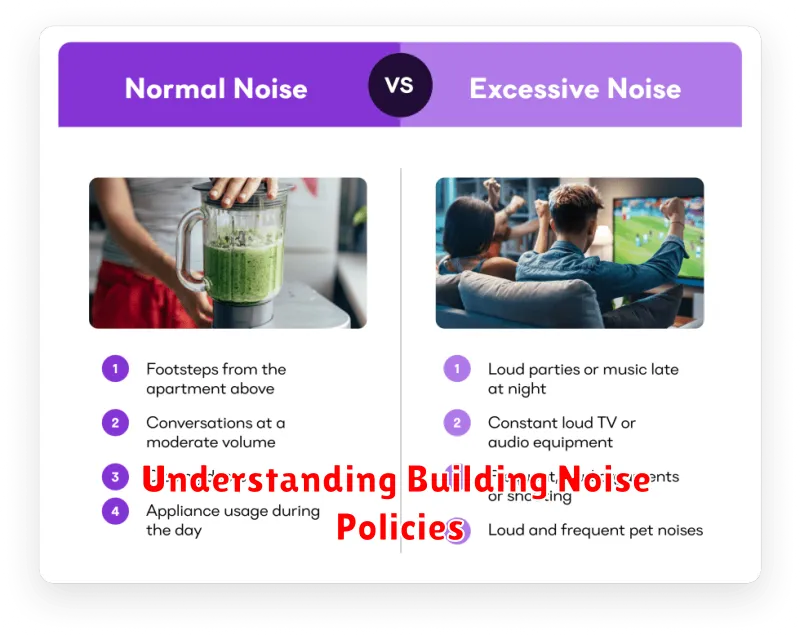
Most apartment buildings have specific noise policies outlined in their lease agreements. It’s crucial to carefully review your lease to understand the rules and regulations regarding noise levels and quiet hours.
These policies typically address common noise issues, such as loud music, parties, and construction. They often specify quiet hours, during which residents are expected to minimize noise. Understanding these policies is the first step in addressing noise complaints effectively.
Key aspects of building noise policies often include:
- Designated quiet hours.
- Acceptable noise levels.
- Rules regarding parties and gatherings.
- Consequences for violating the noise policy.
Familiarize yourself with the specific procedures for reporting noise violations outlined in your lease or building regulations. This might involve contacting building management, security, or a designated resident representative.
Contacting the Property Manager
If speaking directly with your neighbors hasn’t resolved the noise issue, the next step is to contact your property manager. Document each incident with dates, times, and the nature of the noise. This documentation will be crucial when you present your case.
When you contact the property manager, be polite and professional. Explain the situation clearly, providing specific examples from your documentation. Explain how the noise is impacting your ability to peacefully enjoy your residence. Avoid exaggerating or using emotional language. Focus on the facts.
Understand your lease agreement and the community rules regarding noise. Refer to these documents when speaking with the property manager to support your claim. Be prepared to discuss potential solutions, such as mediation or formal warnings to the noisy neighbors.
Keep a record of your communication with the property manager, including dates, times, and the substance of the conversation. If the property manager fails to address the situation adequately, this record will be useful if you need to escalate the issue further.
Using Noise-Canceling Techniques
If communication and compromise haven’t resolved the noise issue, exploring noise-canceling techniques can be beneficial. These techniques focus on reducing the amount of noise that enters your apartment.
Soundproofing Options
Soundproofing your apartment can significantly reduce incoming noise. This may involve adding dense materials to walls, ceilings, and floors to absorb sound waves. Options include:
- Acoustic panels: These decorative panels can be placed strategically on walls to absorb sound.
- Thick rugs and curtains: These soft furnishings can dampen sound reflections and reduce overall noise levels.
- Weatherstripping: Sealing gaps around windows and doors can block noise infiltration.
White Noise and Sound Masking
Using white noise or sound masking can help to cover up unwanted sounds. White noise machines, fans, or even apps playing ambient sounds can create a consistent background noise that makes distracting noises less noticeable.
Ear Plugs or Headphones
While not a permanent solution, earplugs or noise-canceling headphones can provide immediate relief from disruptive noise, particularly during sleep or when focusing on a task.
Filing a Formal Complaint if Necessary
If informal attempts to resolve noise issues with your neighbors prove unsuccessful, filing a formal complaint might be your next course of action. This typically involves contacting your building’s management or landlord. Be sure to document every interaction with your neighbors concerning the noise, including dates, times, and the nature of the disturbance. This documentation will strengthen your case.
If your building has a designated resident manager or superintendent, contact them first. Explain the situation calmly and provide them with the documentation you’ve gathered. They may intervene on your behalf or initiate the formal complaint process according to building policy.
In situations where building management is unresponsive or the noise continues unabated, consider contacting your city’s noise control department or the police department’s non-emergency line. Be aware that involving law enforcement should typically be reserved for truly excessive and disruptive noise.
Understand your lease agreement. It likely contains clauses related to noise levels and quiet hours. Refer to these clauses when making your complaint, as violations of the lease agreement can be grounds for action by building management.
Knowing When to Escalate the Issue
Sometimes, direct communication isn’t enough to resolve noise issues. Knowing when to involve your landlord or building management is crucial.
Document each incident. Keep a record of dates, times, and the nature of the noise disturbance. This documentation will be valuable when you present your case to management.
Give direct communication a fair chance. If you haven’t already, attempt to address the issue with your neighbor directly at least once. Be polite and respectful during this interaction.
Escalate the issue if:
- Direct communication has failed or is impossible.
- The noise is excessive, frequent, or occurs during unreasonable hours.
- The noise is impacting your quality of life or well-being.
- Your neighbor is violating building rules or local ordinances.
When contacting management, present your documented evidence calmly and professionally. Be clear about the steps you’ve already taken and the resolution you’re seeking.
