
Moving into your first apartment is a significant milestone, marking a transition to independence and self-reliance. This exciting chapter can also be daunting, filled with logistical challenges and crucial decisions. Preparing effectively for your first apartment move is essential for a smooth and positive experience. This guide provides comprehensive advice and practical steps to navigate the process, from budgeting and searching for an apartment to packing and moving day logistics. Understanding the intricacies of leasing agreements, renter’s insurance, and utility setup will empower you to confidently embark on this new adventure.
Whether you are a recent graduate, starting a new job, or simply seeking a change, preparing for your first apartment move requires careful planning and organization. From creating a realistic moving budget and understanding your rental options to acquiring essential furniture and household items, there are many factors to consider. This article will provide you with a detailed roadmap, outlining the key steps and offering invaluable tips to make your first apartment move as seamless as possible. Learn how to find the perfect apartment, navigate the application process, and prepare for moving day with confidence and ease.
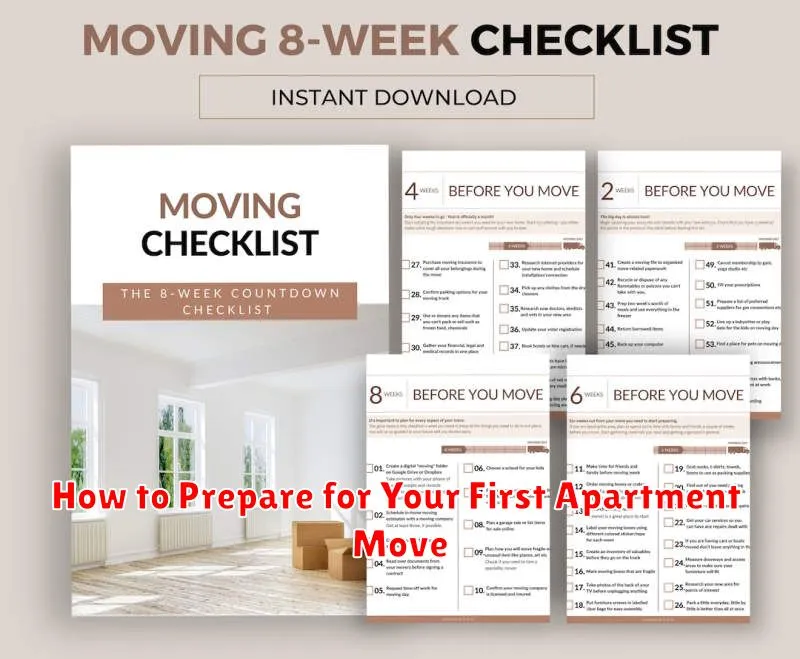
Creating a Moving Checklist
A comprehensive moving checklist is essential for a smooth transition to your first apartment. It helps you stay organized, minimizes stress, and ensures you don’t forget crucial tasks.
Start by creating categories. Common categories include:
- Weeks Before the Move: This includes tasks like researching moving companies, getting packing supplies, and notifying important parties of your address change.
- Days Before the Move: Focus on packing, confirming arrangements with movers, and defrosting the refrigerator.
- Moving Day: Oversee the loading process, complete a final walkthrough of your old place, and keep important documents with you.
- After the Move: Unpack essential items, update your address on official documents, and inspect delivered items.
Within each category, list specific actions. Be detailed. For example, instead of just “pack kitchen,” write “pack dishes,” “pack pots and pans,” “pack pantry items,” etc. This level of detail will make the process less overwhelming.
Booking Movers or a Rental Truck Early
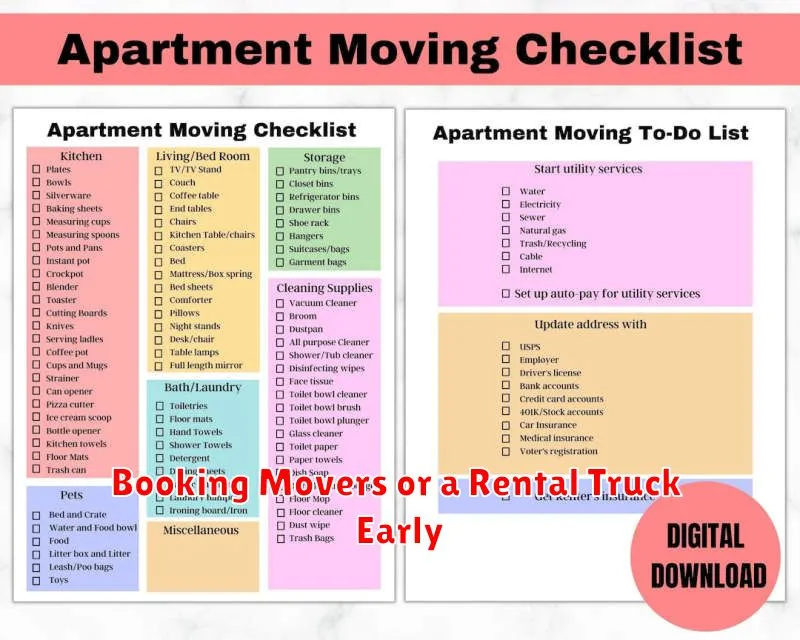
One of the most critical aspects of a smooth move is securing your transportation. Whether you’re hiring professional movers or renting a truck, booking early is essential, especially during peak moving seasons (summer and holidays). Delays in booking can lead to limited availability and potentially higher costs.
For professional movers, start researching and requesting quotes at least 4-6 weeks in advance. This allows ample time to compare services, verify insurance and licensing, and secure your preferred moving dates.
If you’re opting for a rental truck, reserve it 2-4 weeks prior to your move. Consider the size of your belongings and the distance of your move when selecting the appropriate truck size. Smaller trucks are often booked quickly, so early reservation is highly recommended. Don’t forget to factor in necessary equipment like dollies and moving blankets when making your reservation.
Packing Room by Room
Packing room by room is a highly effective strategy for a smooth move. This organized approach prevents chaos and ensures you know where everything is packed. Start with rooms used less frequently, such as guest rooms or storage areas.
Within each room, pack systematically. Begin with items you use least often, like off-season clothing or decorative objects. Clearly label each box with its contents and the room it belongs to. This simplifies unpacking in your new apartment.
Consider creating a packing inventory. A simple list of the contents of each numbered box can be invaluable for locating items quickly and for insurance purposes in case of loss or damage.
Keep essential items separate. Toiletries, medications, a change of clothes, and important documents should be readily accessible in a designated box or bag. This will save you from rummaging through numerous boxes during the first few days in your new apartment.
Labeling Boxes Clearly
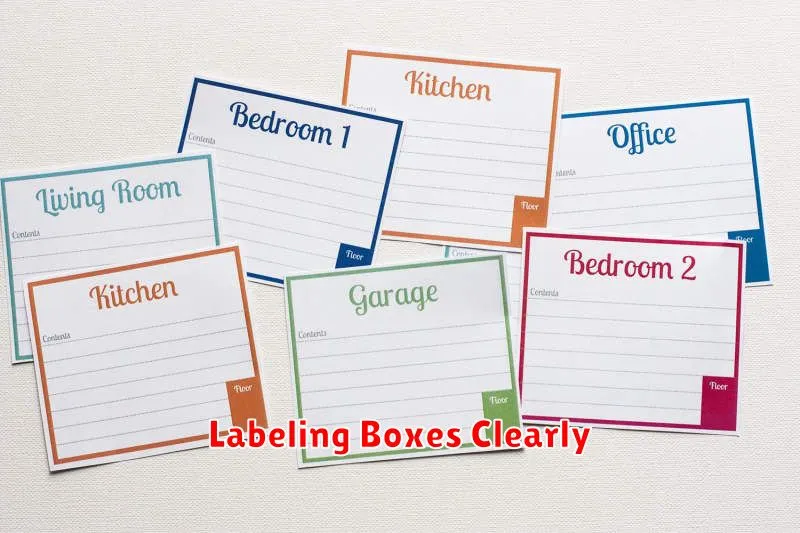
Clear labeling is crucial for a smooth move. It helps you and your movers identify the contents of each box quickly, preventing frustration and saving valuable time during unpacking.
Use a thick marker to write on the top and sides of each box. This ensures visibility from multiple angles. Labeling the sides also helps if boxes are stacked.
Don’t just list the contents; specify the room where the box belongs. For example, instead of “Kitchen Items,” write “Kitchen – Utensils” or “Kitchen – Dishes.” This level of detail simplifies the unpacking process significantly.
Consider using a numbering system and a master list. Assign each box a number and create a corresponding entry in your list detailing its complete contents. This method is especially helpful for tracking valuable items and ensuring nothing gets lost.
For fragile items, mark the boxes with “Fragile” in large, bold letters. Consider adding arrows indicating which side should be kept upright.
Notifying Utilities and Changing Address
One of the most critical steps when moving is handling utilities and your official address. Start by making a list of all your current utility providers. This typically includes electricity, gas, water, internet, and cable.
Contact each provider to schedule the disconnection of services at your old address on your move-out date. Simultaneously, set up new accounts for your new apartment. Be prepared to provide your new address, desired start date, and possibly account information.
Important: Confirm the final meter readings at your old residence to ensure accurate billing. For your new apartment, inquire about existing accounts or necessary meter activations. This can help avoid service interruptions.
Changing your official address is equally important. Update your address with the post office via their website or in person. Notify important institutions such as banks, credit card companies, and any subscription services of your new address.
Inspecting the New Apartment Before Move-In
Before you officially move into your new apartment, a thorough inspection is crucial. This allows you to document any existing damage and ensure everything promised in the lease agreement is in order. This step protects you from being held responsible for pre-existing issues.
Bring a copy of your lease and a checklist. Carefully examine every room, paying attention to the following:
- Walls and ceilings: Look for cracks, holes, water stains, or signs of mold.
- Floors: Check for damage, stains, or loose tiles.
- Appliances: Test all appliances (refrigerator, oven, dishwasher, microwave, etc.) to ensure they are functioning correctly.
- Plumbing: Check for leaks, proper water pressure, and functioning drains.
- Electrical outlets and light fixtures: Ensure all outlets work and light fixtures are operational.
- Windows and doors: Check for proper sealing and functionality of locks.
Document everything! Take photos or videos of any existing issues. Inform your landlord immediately and get confirmation in writing regarding repairs and timelines.
Preparing an Essentials Box for Day One
Moving into your first apartment can be overwhelming. Having an essentials box readily available can make your first day (and night) much smoother. This box should contain everything you’ll need immediately upon arrival, saving you from rummaging through packed boxes.
Essential items to include are toiletries such as toothbrush, toothpaste, soap, and shampoo. Don’t forget medications, if any. Consider packing a change of clothes, pajamas, and a towel. Having basic tools like a screwdriver, hammer, and box cutter can also prove incredibly useful.
For your first night, pack bedding, including sheets, pillows, and blankets. If you have room, a small bedside lamp can provide comfort. Finally, consider some practical items: phone and laptop chargers, some snacks, bottled water, and any important documents.
Clearly label this box “Essentials” and keep it easily accessible, perhaps in your car rather than the moving truck.
