
Signing a lease agreement is a significant commitment. Whether you’re renting an apartment, house, or commercial space, understanding the terms of your lease is crucial. This comprehensive guide will equip you with the knowledge to effectively read and understand a lease agreement, covering key clauses, common pitfalls, and your rights as a tenant. Learn how to navigate the complexities of a lease agreement and protect yourself from potential issues. From rent amounts and due dates to security deposits and lease terms, we’ll break down the essential components of a lease agreement so you can confidently enter into a rental agreement.
Avoid future disputes and costly misunderstandings by taking the time to thoroughly examine your lease agreement. This article will delve into the intricacies of common lease clauses, including maintenance responsibilities, pet policies, and renewal options. We’ll provide clear explanations of important terms like lease duration, grace period, and early termination clauses. By understanding your rights and responsibilities as outlined in the lease agreement, you can ensure a smooth and positive renting experience. Don’t sign anything until you fully comprehend your lease agreement – empower yourself with the knowledge you need.
Key Terms You Need to Know
Understanding a lease agreement requires familiarity with specific terminology. Here are some key terms to help you navigate your lease:
Basic Terms
Landlord/Lessor: The owner of the property being rented. Tenant/Lessee: The individual renting the property. Lease Term: The duration of the rental agreement. Rent: The payment made for the use of the property. Security Deposit: Money held to cover potential damages.
Important Clauses
Grace Period: The allowed time after the due date to pay rent without penalty. Late Fees: Charges for paying rent after the grace period. Lease Renewal: The process of extending the lease term. Eviction: The legal process of removing a tenant from the property.
Understanding Rent Increases and Renewals
Rent increases and lease renewals are critical aspects of any lease agreement. It’s important to understand how your rent can be increased and what options you have for renewal.
Rent Increases
Your lease should clearly state the initial rent amount and the frequency of payments. It should also outline the conditions under which your landlord can increase the rent. Many jurisdictions have laws regulating how much and how often rent can be increased, so familiarize yourself with local regulations. The lease should specify the amount of notice required before a rent increase takes effect.
Lease Renewals
The lease should stipulate the length of the lease term. It should also explain the process for renewing the lease. Some leases automatically renew on a month-to-month basis after the initial term expires, while others require a new lease agreement. Pay close attention to any changes in terms and conditions, including rent, if you renew your lease. If you choose not to renew, be sure to provide proper notice to your landlord as outlined in the lease agreement.
What’s Included in the Lease
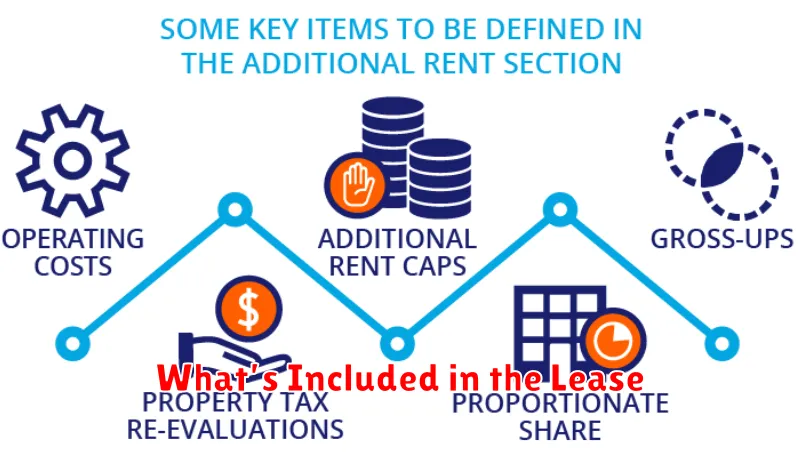
A lease agreement is a legally binding contract between a landlord (lessor) and a tenant (lessee). It outlines the terms and conditions of renting a property. Understanding the components of a lease is crucial for both parties.
Key elements typically included are the names and contact information of both the landlord and tenant. The lease term, specifying the start and end dates of the rental period, is clearly stated. The rent amount, due date, and accepted payment methods are detailed.
The lease will also describe the property address and any included amenities. It will often outline tenant responsibilities, such as property maintenance and utility payments. Landlord responsibilities regarding repairs and property upkeep are usually defined as well.
Security deposit details, including the amount and conditions for its return, are typically included. The lease may specify restrictions on pets, subletting, or alterations to the property. Finally, the conditions for lease termination by either party are often outlined.
Pet and Guest Policies
Lease agreements often include specific clauses regarding pets and guests. Pet policies typically outline acceptable types and breeds of animals, if any are allowed at all. They may also stipulate pet deposits or monthly fees, and rules concerning pet waste disposal and noise control.
Guest policies address the duration and frequency of guest stays. Some leases may restrict long-term guests or require landlord notification for overnight visitors. Understanding these policies is crucial to avoid potential lease violations.
Responsibilities for Repairs and Maintenance
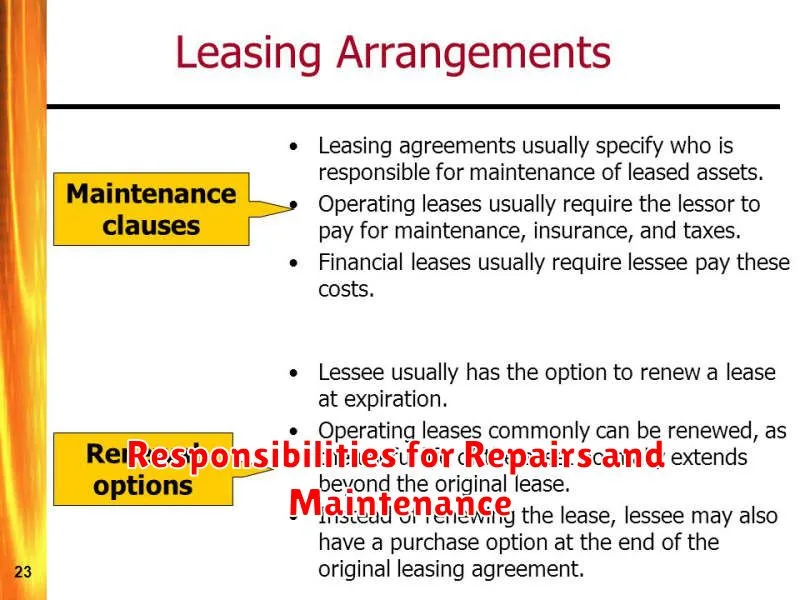
A lease agreement should clearly outline the responsibilities for repairs and maintenance of the property. Understanding these stipulations is crucial to avoid future disputes and unexpected expenses.
Typically, the landlord is responsible for major structural repairs, such as roof leaks, plumbing issues, and heating system malfunctions. The tenant, however, is usually responsible for minor repairs and routine maintenance, such as replacing light bulbs or unclogging drains.
The lease may also specify who is responsible for maintaining appliances. It’s important to carefully review this section to understand your obligations. Some leases may require tenants to maintain appliances provided by the landlord, while others may place that responsibility solely on the landlord.
Clearly defined responsibilities for pest control, landscaping, and snow removal should also be outlined in the lease agreement. Pay close attention to these details to avoid any ambiguity.
Early Termination Clauses
Early termination clauses outline the conditions under which you can break your lease before the agreed-upon end date. Understanding these clauses is crucial.
These clauses typically stipulate specific circumstances for permissible termination, such as:
- Active military duty
- Job relocation (often requiring a certain distance)
- Domestic violence
- Unit becomes uninhabitable due to landlord’s negligence
Pay close attention to any penalties associated with early termination. These could include forfeiting your security deposit, paying a specified fee (often equivalent to one or two months’ rent), or being held responsible for rent payments for the remainder of the lease term.
Some leases may offer a buyout option, allowing you to pay a lump sum to terminate the lease. Carefully consider the financial implications before invoking an early termination clause.
When to Negotiate Terms
Negotiating terms within a lease agreement is often crucial for protecting your interests. It’s generally advisable to negotiate before signing the lease. Once signed, altering terms becomes significantly more difficult.
Key times to negotiate include:
- Initial offer: This is the landlord’s first proposal and often has room for negotiation.
- Before the lease term begins: This provides time to address concerns and reach a mutually agreeable contract.
- Upon renewal: Renewals offer an opportunity to renegotiate existing terms based on market conditions or your changing needs.
Don’t hesitate to negotiate if you feel a term is unfair or unclear. Clear communication with the landlord is essential throughout the negotiation process.
